Email Marketing for Mumbai Businesses: Build a List That Actually Replies
By Ayush DubeyNovember 18, 202613 min read
Short answer: Email marketing for Mumbai businesses works when you own the list, send useful mail to people who asked for it, and measure replies instead of opens. A small business can start with a tool costing roughly Rs 150 to Rs 900 a month, while managed agency campaigns run roughly Rs 5,000 to Rs 30,000 a month. Never buy a list.
The electronics shop in Andheri that looked at email marketing for Mumbai businesses
An electronics shop in Andheri had a problem most Mumbai businesses would recognise, and it is the problem that makes owners look at email marketing for Mumbai businesses. It sold a television, a mixer or a phone to a customer, and then never spoke to that customer again. The customer bought the next television from the shop that sent a festival offer, and the next phone from the shop that simply stayed in touch. The Andheri shop was not losing customers to better products. It was losing them to silence.
The owner tried the obvious fix: offers on WhatsApp to every number he had collected. Within a month half of them had blocked him. WhatsApp is a conversation, not a noticeboard. What the shop needed was a channel it owned, that customers had chosen: a list of its own customers, built with permission.
Email is not dead. It is the only marketing channel where the audience is yours, the cost is small, and nobody can take the list away from you. A social media account can be restricted, an ad account can be paused, a WhatsApp number can be blocked. An email list stays yours.
Why email still works when everyone is on WhatsApp
The objection every owner raises is fair: nobody in Mumbai reads email, everyone is on WhatsApp. The first half is wrong.
People do read email, they just read it differently. They read it when they are deciding, not when they are chatting. A customer checks WhatsApp fifty times a day and email three times, but the email they open is the one with the festival offer or the quote they asked for. WhatsApp wins attention, email wins decisions, and a business needs both.
Email also does things WhatsApp cannot. It carries a proper catalogue, a price list and a link that opens on any device. It reaches a customer who changed their phone number, because the email address stayed the same. And it costs almost nothing to send: a thousand emails cost less than a single day of newspaper advertising.
The businesses that do email well send better mail to a smaller list of real customers, and measure the replies, not the opens.
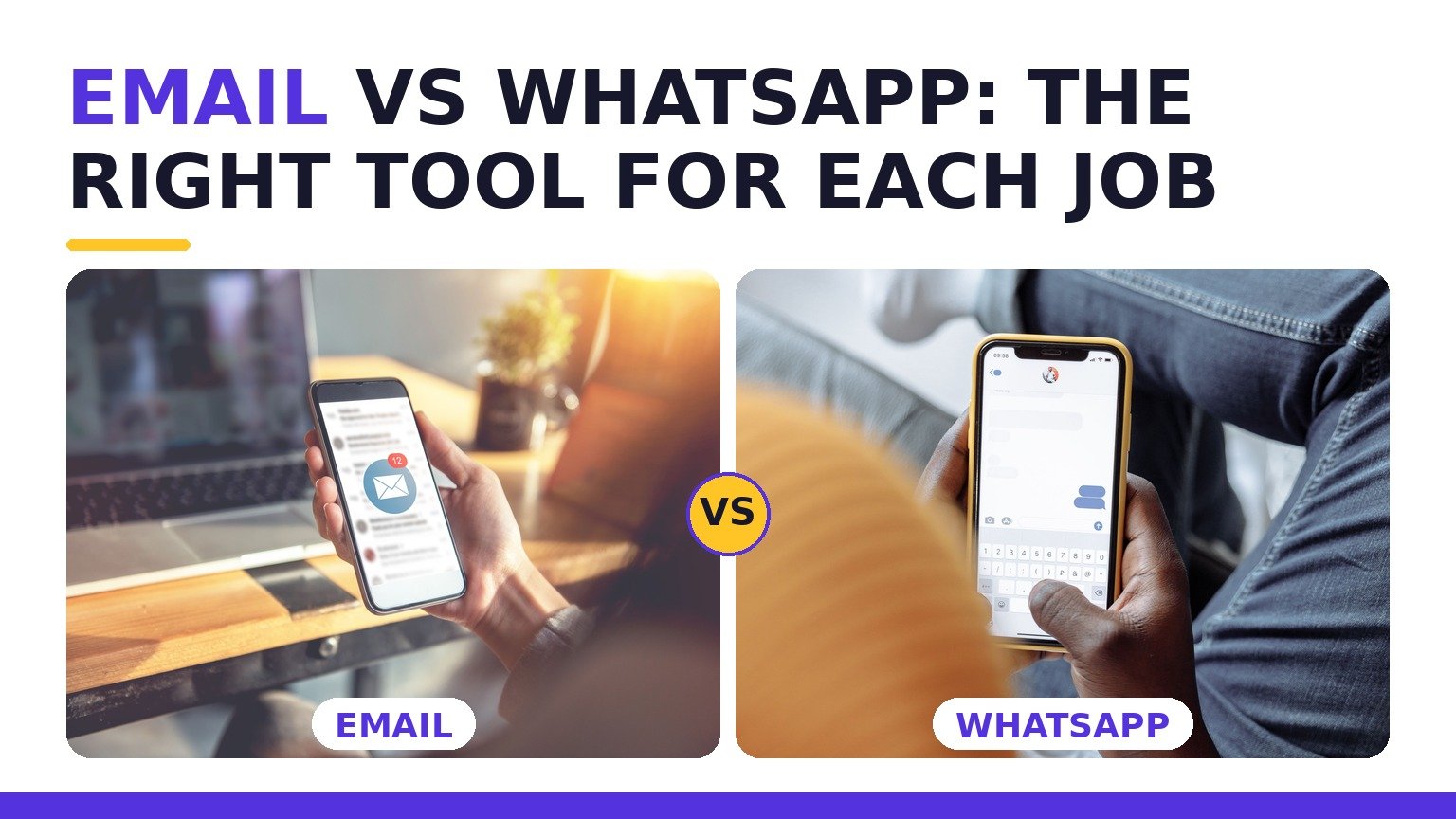
Email vs WhatsApp: which job each one does best
They are two tools for two different jobs, and the businesses that use both well give each job to the right tool.
WhatsApp is for the conversation. A customer asks a question, you answer in minutes, you send a photo, you confirm an appointment. It is immediate, personal and two-way. It is also the wrong place for a monthly offer to a thousand people. Our guide to WhatsApp automation for Mumbai businesses shows how to use it properly.
Email is for the record and the offer. The quote, the festival catalogue, the service reminder, the price list. It waits in the inbox until the customer is ready, it can be searched and forwarded, and it never gets lost under forty other chats.
The rule is simple. If the customer needs an answer now, use WhatsApp. If they need something to keep, compare or act on later, use email. If you are sending the same message to more than twenty people at once, use email.
How to build an email list without buying one
Buying an email list is the fastest way to destroy your email marketing before it starts. A bought list is full of people who never asked to hear from you, never open your mail, and report it as spam. One bad campaign can get your domain flagged, and then even your genuine customers stop receiving your mail. Never buy a list.
Start with the customers you already have. Every invoice, enquiry form, walk-in and delivery is a chance to ask for an email address, with a clear reason: a bill copy, a service reminder, a festival offer, a warranty update. A list built this way is small at first, a hundred names, then three hundred, then a thousand, but every name on it is a real customer who expects your mail.
Then add the quiet collection points. A signup box on your website offering something useful, a link in your WhatsApp Business profile, and a small card at the billing counter. People sign up for a benefit, not for a newsletter.
The rule for every name is the same. They gave you the address themselves, they know what they signed up for, and they can leave with one click. That is what keeps your mail out of the spam folder. A list of five hundred real customers beats a list of fifty thousand strangers, every time.
The 5 emails every Mumbai business should send
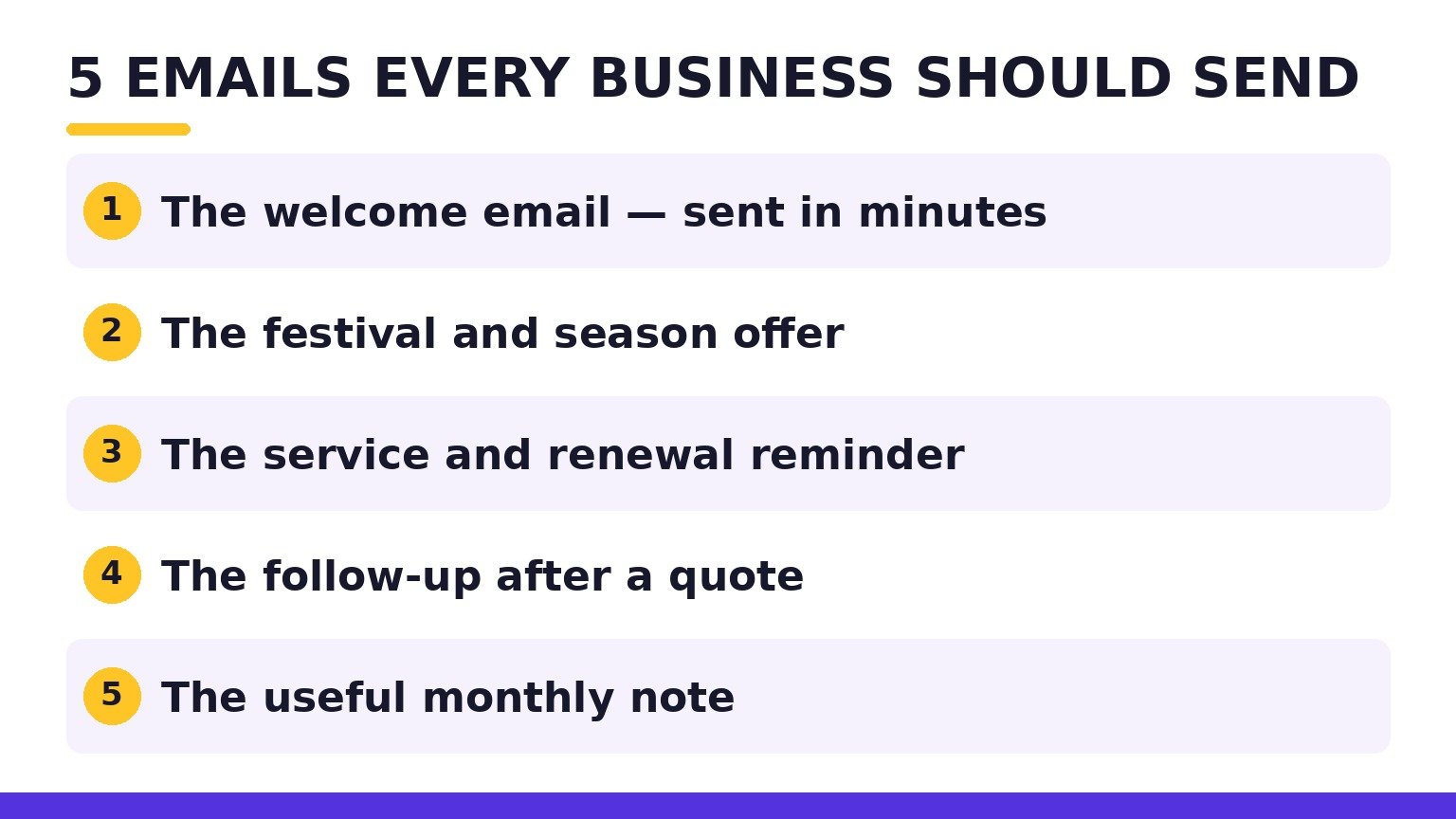
Most businesses do not need a complicated email plan. They need five emails, sent well and on time.
1. The welcome email. Sent within minutes of someone joining the list. Thank them, say what they will receive and how often, and give them one useful thing straight away. The welcome email is the most opened email any business ever sends.
2. The festival and season offer. Diwali, Eid, Christmas, Gudi Padwa, the monsoon sale: Mumbai runs on festivals. Send the offer a week before the festival, not on the day, and make it specific: a price, a date, a reason to act now.
3. The service and renewal reminder. For clinics, water purifier services, pest control, vehicle servicing and coaching classes, the most valuable email is a reminder: your service is due, your contract renews next month, your child’s batch starts on Monday.
4. The follow-up after a quote. A customer asked for a price, you sent it, and then nothing. A short email three days later, just a check: did you get the quote, is there a question, would you like a different option. This is the email that turns quotes into orders. For the wider follow-up system, see our guide to lead generation for Mumbai businesses.
5. The useful monthly note. One email a month, with three things that help the customer, not three things that sell to them. A clinic can send seasonal health tips, a jeweller can explain how to care for gold, a coaching class can share exam dates. Useful mail gets opened and remembered. Sales mail gets deleted.
Five emails, done consistently, are enough. The businesses that fail at email send nothing for six months and then send four offers in one week.
Automation: the emails that send themselves
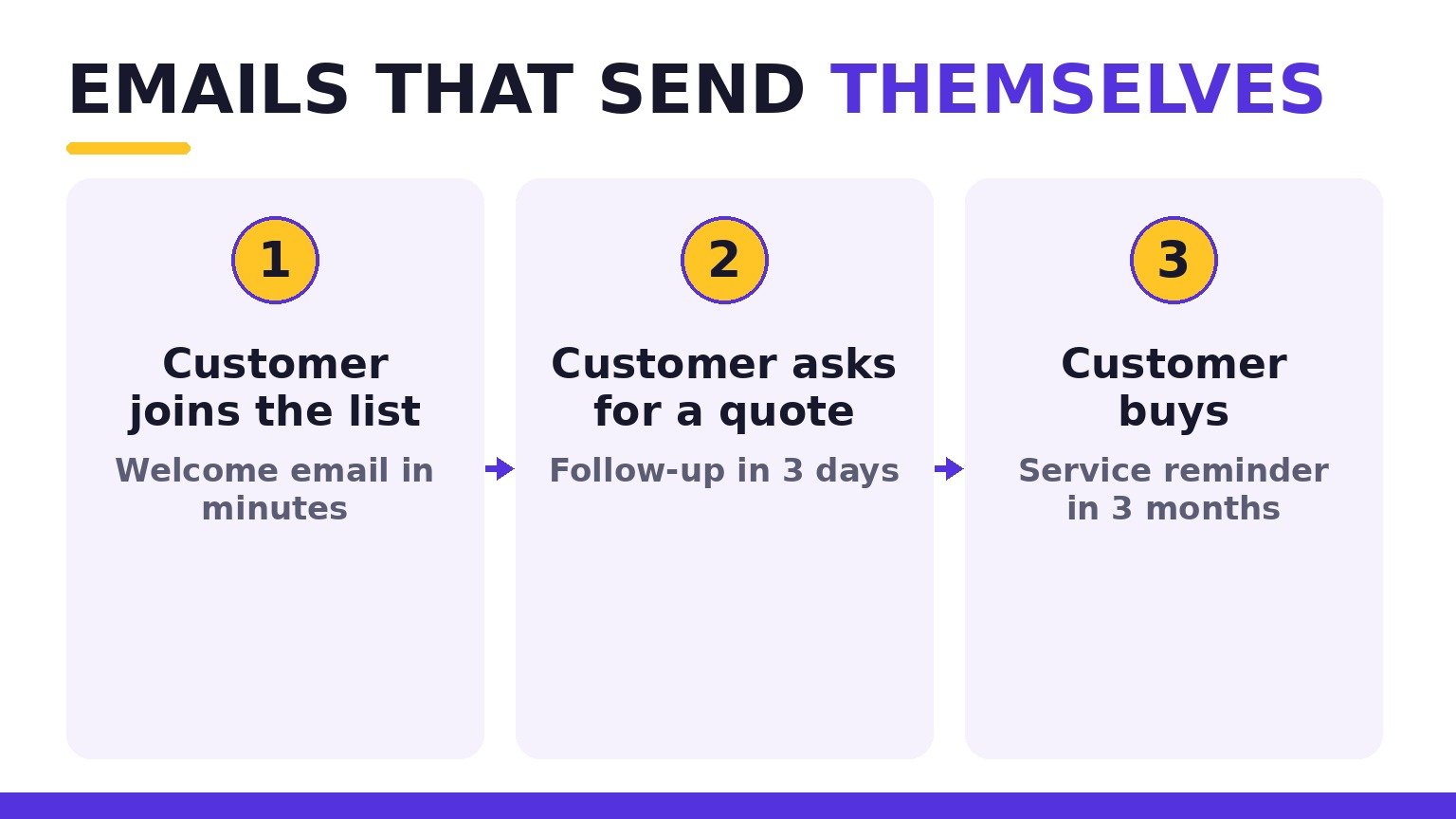
The five emails above can be sent by hand. But the emails that make the most money are the ones nobody has to remember to send, because they are automated: set up once, and sent automatically when a customer does something.
A welcome flow sends the welcome email the moment someone joins, then a second email three days later with a useful guide, then a third a week later with an offer. An abandoned enquiry flow follows up when someone asks for a quote and goes quiet. A repeat-customer flow sends a thank-you after a purchase, a service reminder after three months, and a festival offer before the next season.
Automation does not mean impersonal. A good automated email reads like it was written for one person, because it was triggered by something that person did.
This is where a CRM earns its keep: when the email tool knows who enquired, who bought, and who went quiet, the automation sends the right mail to the right person. Our guide to CRM software for Mumbai businesses explains how the list, the follow-ups and the reports fit together.
How to stop your emails going to spam
Deliverability matters more than design. A beautiful email that lands in spam has the same value as an email never sent.
Send only to people who asked for your mail. Real subscribers open, reply and click, and those signals tell the inbox providers your mail is wanted.
Send regularly, not in bursts. An inbox provider trusts a sender who mails once a week, every week. Consistency builds reputation, and reputation decides the inbox.
Keep the list clean. Remove addresses that bounce, remove people who have not opened anything in six months, and honour every unsubscribe the same day. A smaller, cleaner list delivers better than a large, stale one.
Write like a person, not a poster. Avoid subject lines in all capital letters, and avoid sending an email that is one big image with no text. A short, honest subject line and a clear offer will beat a shouting poster every time.
Use a proper sending tool, not your personal inbox. A tool like Zoho Campaigns, Mailchimp or Brevo sends from your domain, tracks what happens, and handles unsubscribes properly.
What does email marketing for Mumbai businesses cost?
Email is the cheapest marketing a Mumbai business can do well, and the cost has two parts: the tool, and the work. Zoho Campaigns starts from about Rs 150 a month for 2,000 contacts, and its pricing page lists the plans openly. Other tools in the same range start from roughly Rs 500 to Rs 900 a month for a small list. Mailchimp’s pricing page shows the same pattern: a free tier for a small list, then a monthly fee that grows with contacts and features.
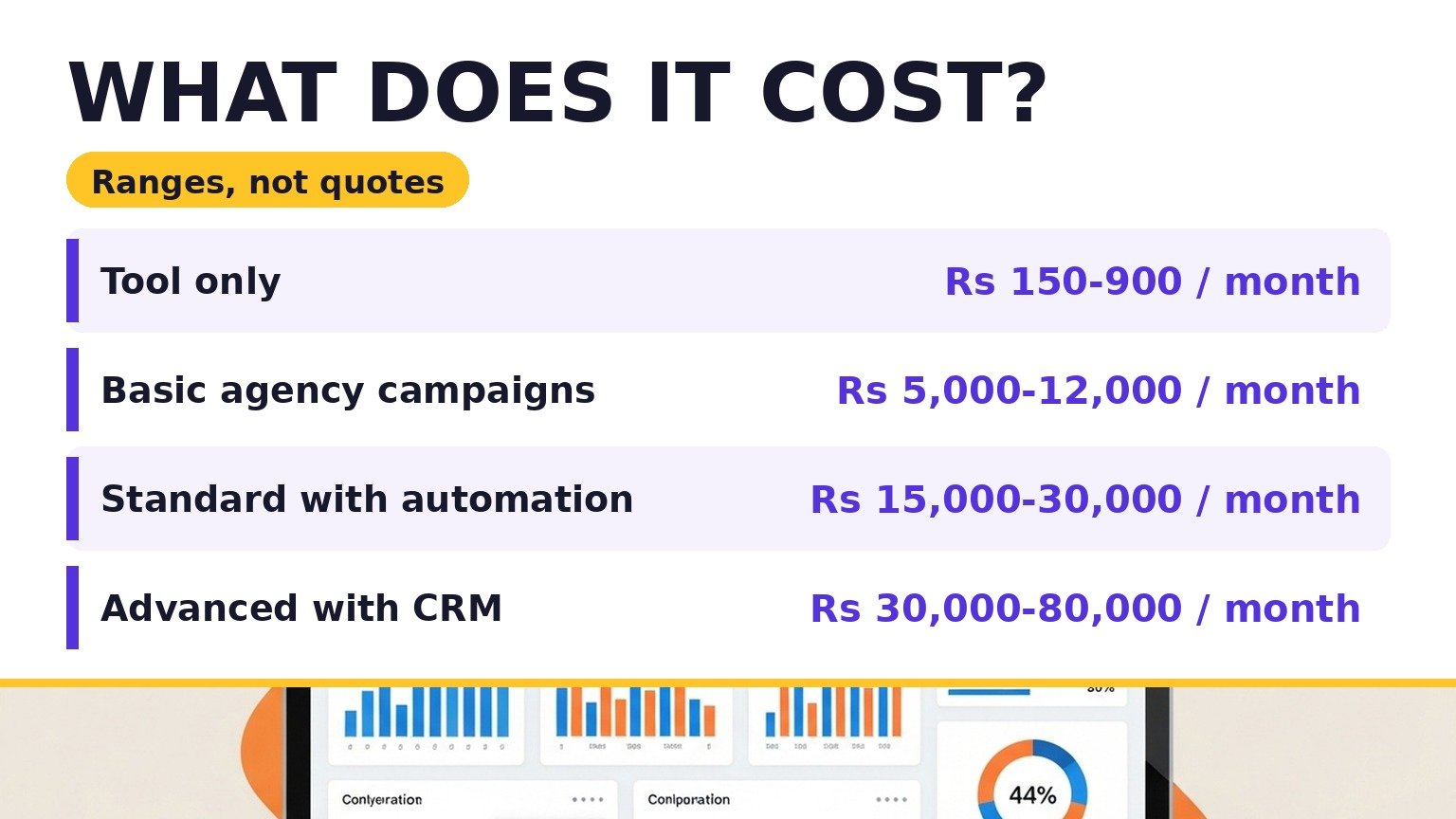
The work is where the money goes. The ranges below are published market ranges for 2026, not Digital Dhatu prices, and all exclude 18 percent GST.
Level
Typical range
What it covers
Do it yourself, tool only
Roughly Rs 150 to Rs 900 per month
Tool, templates, sending, basic reports
Agency, basic campaigns
Roughly Rs 5,000 to Rs 12,000 per month
Up to 4 emails a month, up to 5,000 subscribers, basic reports
Tool plus management, depending on list size and frequency
Bulk-credit sellers quote differently: 2.5 lakh credits from roughly Rs 6,300 for thirty days sounds cheap, but credits are not campaigns. A credit buys a send, not a strategy, a list, a design or a follow-up.
The right question is not what email costs, but what one repeat customer is worth. If a festival email brings back twenty customers who each spend Rs 2,000, it has paid for a year of tool costs in one afternoon.
How to measure email properly: replies, not opens
Most email reports show opens, and opens are the least useful number in the report. Judge your email by four numbers that actually mean something.
Replies. How many people wrote back, asked a question, or called after the email. A reply is a conversation starting, and conversations become orders. Clicks. How many people clicked through to the offer, the catalogue or the booking page. A click is intent. Repeat enquiries and orders. How many customers who received the email came back within thirty days. This is the number that pays for the campaign. Unsubscribes and spam reports. A few per campaign are normal. A sudden spike means the mail was wrong: wrong audience, wrong offer, or too frequent.
If an agency reports only opens and sends, ask for the other four numbers.
What an email marketing agency should do every month
If you hire an agency, you are paying for consistency and judgement, not for sending. Every month, they should do six things.
1. Clean the list. Remove bounces, remove people who asked to leave, and flag the addresses that have not engaged in six months.
2. Plan the month’s mail. Four emails at most: a useful note, a festival or season offer, a service reminder, and a follow-up. The plan should be agreed before the month starts.
3. Write and design the emails. Short subject lines, plain language, one clear offer per email, and a design that works on a phone.
4. Send at the right time. Late morning or early evening on a weekday, tested against your own list. Mumbai customers read mail on their own schedule, and your list will teach you what it is.
5. Report the four real numbers. Replies, clicks, repeat enquiries and unsubscribes, with the orders that followed.
6. Improve one thing. Each month, one change: a better subject line, a shorter email, a different offer, a cleaner segment.
The tool costs roughly Rs 150 to Rs 900 a month for a small list. Managed agency campaigns run roughly Rs 5,000 to Rs 12,000 a month for basic campaigns, roughly Rs 15,000 to Rs 30,000 a month with automation, and roughly Rs 30,000 to Rs 80,000 a month for advanced work with CRM integration. Bulk credits buy sends, not a strategy, so compare the whole job, not the credit price.
Is email marketing still worth it when everyone is on WhatsApp?
Yes, because they do different jobs. WhatsApp is for the conversation: quick answers, photos, confirmations. Email is for the record and the offer: catalogues, price lists, festival offers and reminders. A business that uses both well gives each job to the right tool, and email is the only channel where the audience is truly yours.
How do I build an email list without buying one?
Ask your existing customers, with a clear reason: a bill copy, a service reminder, a festival offer. Add a signup box on your website, a link in your WhatsApp Business profile, and a small card at the billing counter. Never buy a list: the addresses are people who never asked for your mail, and one bad campaign can get your domain flagged.
How often should I email my customers?
Once a week at most, and once a month at minimum. Four emails a month is a good rhythm: a useful note, a festival or season offer, a service reminder and a follow-up. The same offer four times in one week is spam.
What should an email marketing agency do every month?
Clean the list, plan the month’s mail in advance, write and design the emails, send at the right time, report replies, clicks, repeat enquiries and unsubscribes, and improve one thing each month.
How do I stop my emails going to spam?
Send only to people who asked for your mail, send regularly instead of in bursts, remove bounced and unengaged addresses, and send through a proper tool from your own domain. Honest lists and steady sending build the reputation that keeps mail in the inbox.
A customer who gave you their email address has given you something valuable: permission to stay in touch. Send mail that is useful, and the list becomes the cheapest and most reliable source of repeat business you own. If you would like help building a list and a monthly email plan, book a free consultation with Digital Dhatu.
Share:
Want results like these for your business?
Talk to our team for a free consultation, with no obligation.
Start with the free foundations: a complete Google Business Profile with real photos and correct hours, a WhatsApp catalogue of your stock, and 3 to 5…
A basic AMC covers repairs when things break, while managed IT support prevents most breaks in the first place: monitoring, patching, backup checks and a helpdesk…
Short answer: Start with the four apps that matter: Google Business Profile, Zomato, Swiggy, and Instagram. A single-outlet cafe spends around Rs 35,000 to 80,000 a…